
When I was 17, my mother gave me Samuel Hahnemann’s “Organon of the Art of Healing”, the “bible of homeopathy”, so to speak. In this book, Hahnemann summarised his life’s work and his teachings in a compact form. I found his thoughts and descriptions very plausible and wondered why homeopathy is not always practised according to his instructions. I later learnt the difference between “homeopathy” and “classical homeopathy”.
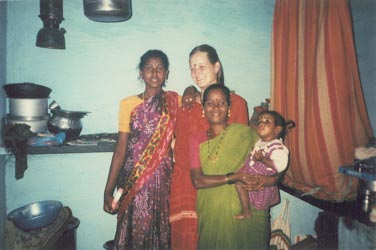
Then my interest in homeopathy lay dormant until after my Leaving Cert. At that time, we travelled overland to India for seven months on two buses and two motorbikes. We were reasonably well equipped with conventional medicine, but the most important thing was my homeopathic first-aid kit (still in D potencies at the time) and the accompanying guidebook. As a result, I was suddenly responsible for the health of my fellow travellers as a “healer”. Various flu-like infections were a piece of cake, and most of the diarrhoea was easy to get under control. I had more palpitations when a friend got a purulent tonsillitis. She turned to me with confidence and the warnings of the conventional doctors that angina should be treated immediately with antibiotics because otherwise the heart would be damaged flashed through my mind. Fortunately, my friend had the most typical of all Mercurius symptoms: a sweet metallic taste in her mouth, so finding the remedy was easy. She was cured within a few days time and my confidence in homeopathy grew.
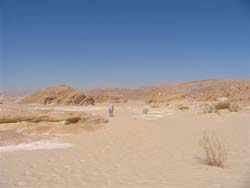
My key experience was when a friend of mine had a bad motorbike crash in the Iranian desert and came back to the buses dazed and slow. We helped him to bed and consulted our medical guides. We realised that his pupils were unevenly sized, but didn’t tell him so as not to worry him. We knew the situation was serious. In addition, our visa was short and the nearest hospital was hundreds of kilometres away. With a very queasy feeling, I gave Arnica and Hypericum, always alternating, and by the evening his pupils were the same size again and his general condition was better. So we gave him bed rest in the back of the motorhome and drove on. Two weeks later he was well again. I was now sure that I wanted to become a homeopath and from then on I studied homeopathy in my spare time. In order to have a good foundation in conventional medicine, I decided to train as a nurse first.
Much later, during my nurse training, I learnt that unevenly sized pupils after a fall indicate a cerebral haemorrhage. It was then that I realised the extent of this homeopathic success. Homeopathy is not only a gentle healing method, it is also a very fast-acting medical measure for acute illnesses. There are now even emergency doctors who work homeopathically.
After my nursing exams, I continued to work in hospital, but found it incredibly sad not to be allowed to treat patients with clear homeopathic symptoms. So I studied medical books in order to gain a licence to practise as an alternative practitioner.
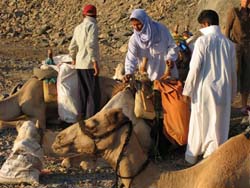
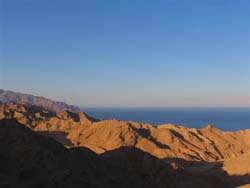
However, I was drawn back out into the world, so I took my books and lived in the Sinai on the Gulf of Aqaba for a year. I was employed as a nurse at a diving centre, but treated patients homeopathically wherever necessary. I also had the opportunity to take homeopathy courses there via the internet. One day, even the Bedouins approached me and I suddenly had a lot of Arab patients. I was amazed to realise that Hahnemann’s instructions were much easier to follow with them.
In our culture, individualisation and psychology have significantly expanded the field of homeopathy. There is a different expectation of health, and often a certain desire for cognition, learning, enlightenment or similar resonates. Illness as an expression of emotional tensions in the family structure carries much more weight with us. This means that illness often occupies a role in the family dynamic. This role, i.e. the illness, can only be given up if something changes in the family. This means that the homeopath may have a therapeutic function for the whole family. Hahnemann already wrote that the homeopathic physician must ensure a healthy environment for the convalescent, i.e. disagreements in the family must also be resolved. I think that this aspect is becoming increasingly important and complicated in our modern society. In Hahnemann’s time, and even today with the Bedouins, people felt healthy and content more quickly. With us, the individual seeks more love and recognition, wants to be fully accepted and live his or her full potential. Homeopathy grows with this demand and can initiate a great deal of self-awareness and self-development.
What pleases me most about homeopathy is that the whole person, as they are, is at the centre and is recognised. There is no theoretical edifice of how one should be, what is bad and what is good. The description of the current state is the most important thing. Of course, this state can be unpleasant. But that’s why you go and see a homeopath. Thus I consider homeopathy in chronic illnesses as a path that I take together with the patient. Sometimes the focus is more on the physical complaints, sometimes the emotional or spiritual ones. But it is always about getting a little closer to the goal: A contented life, physical, mental and spiritual well-being, with an awareness of one’s own possibilities, needs and love for oneself and one’s fellow human beings.